
NCLEX practice questions are the single most effective tool for building the clinical reasoning skills the licensing exam demands — but only when paired with thorough, reflective rationale review. Working through questions without understanding why each answer is right or wrong produces very little improvement in exam performance. Understanding the reasoning behind every answer choice is what builds the transferable clinical judgment the NCLEX tests.
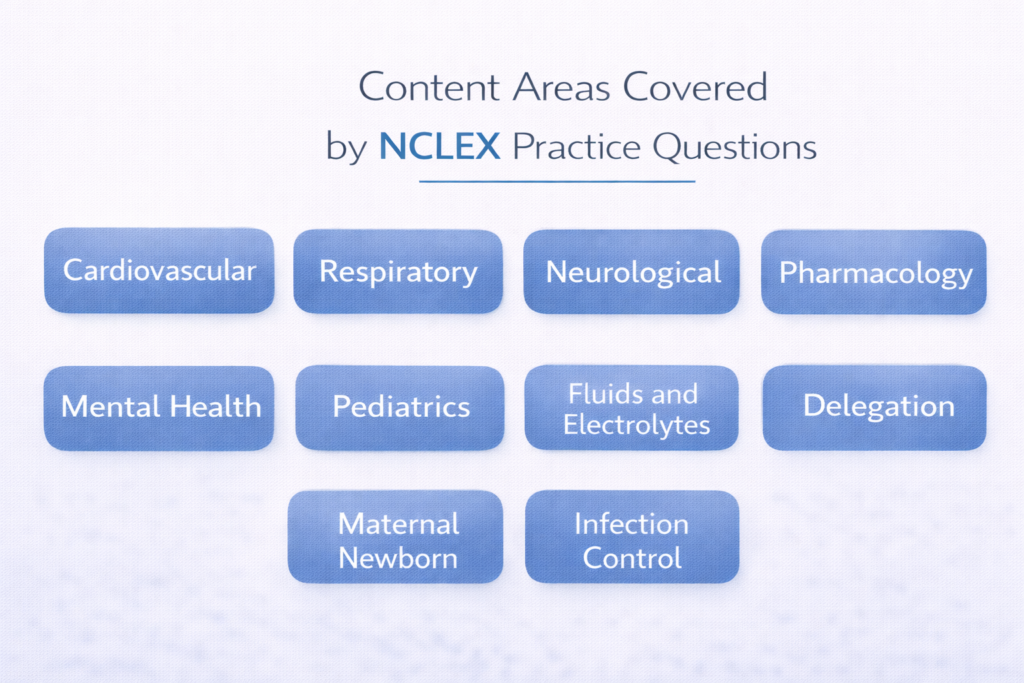
The 20 NCLEX practice questions in this guide are drawn from the highest-yield content areas on the exam: cardiovascular nursing, respiratory nursing, neurological nursing, pharmacology, mental health nursing, maternal newborn nursing, pediatrics, fluid and electrolytes, delegation and prioritization, and infection control. Each question is followed by a detailed rationale that explains not only why the correct answer is correct but why each incorrect option is wrong — giving you the full clinical reasoning picture with every item.
Use these NCLEX practice questions as a focused review session. Read each question carefully, commit to an answer before reading the rationale, and spend as much time on the explanation as you spent on the question itself. This is the study habit that separates candidates who improve from those who plateau.
How to Get the Most Out of These NCLEX Practice Questions
Before diving into the questions, a brief note on how to use them most effectively. The biggest mistake students make with NCLEX practice questions is reading the question, glancing at the answer, and moving on. This approach produces familiarity but not understanding — and the NCLEX tests understanding, not familiarity.
For each question, read the stem carefully and identify what is being asked before looking at the answer choices. Commit to your answer. Then read the full rationale — including the explanations for the options you did not choose. If you got the question right but for the wrong reason, the rationale will reveal that. If you got it wrong, the rationale explains exactly where your reasoning diverged from the clinical standard the NCLEX applies. Both situations are valuable learning opportunities that passive question review misses entirely.
These NCLEX practice questions are organized by content area so you can use them as targeted review after studying each topic. They range from straightforward application questions to more complex prioritization and clinical judgment scenarios, reflecting the variety of item difficulty you will encounter on the actual exam.
Cardiovascular and Respiratory NCLEX Practice Questions
Question 1 — Cardiovascular
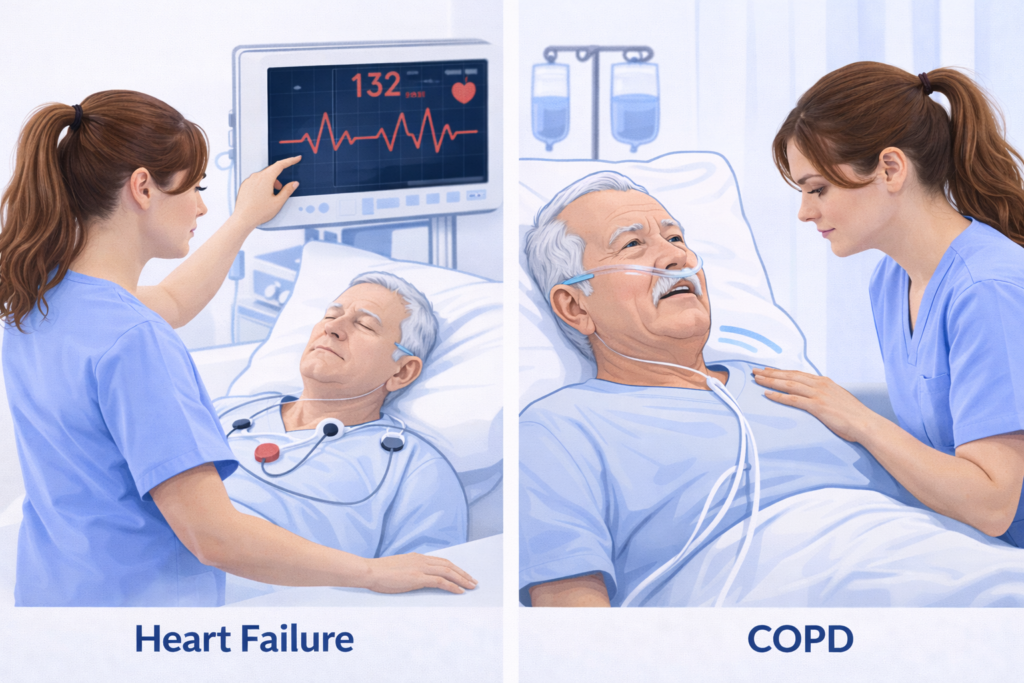
A nurse is caring for a client who was admitted with acute decompensated heart failure. The client has a weight gain of 4 pounds since yesterday, crackles bilaterally in the lower lung fields, and an oxygen saturation of 91% on room air. Which action should the nurse take first?
- A. Administer the prescribed oral furosemide.
- B. Elevate the head of the bed to 45 degrees and apply supplemental oxygen.
- C. Obtain a 12-lead ECG.
- D. Notify the physician of the weight gain.
Correct Answer: B
Rationale: The client is experiencing respiratory compromise — oxygen saturation of 91% and bilateral crackles indicate pulmonary edema with inadequate oxygenation. The first action follows the ABCs: address breathing before any other concern. Elevating the head of the bed reduces venous return, decreases preload, and improves respiratory mechanics. Supplemental oxygen directly addresses the hypoxemia. Option A is appropriate but is not the first action — assessment and oxygenation precede medication administration. Option C is a useful diagnostic step but not the immediate priority when the client is hypoxic. Option D may be warranted but notifying the physician is secondary to stabilizing the client’s oxygenation first.
Question 2 — Cardiovascular
A nurse is reviewing telemetry for a client receiving digoxin for atrial fibrillation. The nurse notes a heart rate of 48 beats per minute, a new first-degree AV block, and the client reports nausea and yellow-green visual disturbances. What is the nurse’s priority action?
- A. Administer the scheduled dose of digoxin and reassess in one hour.
- B. Hold the digoxin, check the serum digoxin level and potassium, and notify the physician.
- C. Place the client on continuous cardiac monitoring and document the findings.
- D. Reassure the client that visual changes are a common side effect of digoxin.
Correct Answer: B
Rationale: The client is displaying classic signs of digoxin toxicity: bradycardia, AV block, nausea, and yellow-green visual disturbances (xanthopsia). The priority action is to hold the medication, obtain a serum digoxin level and potassium level — hypokalemia potentiates digoxin toxicity — and notify the physician immediately. Option A is dangerous and directly contraindicated: administering additional digoxin to a client showing toxicity signs can precipitate life-threatening dysrhythmias. Option C is appropriate but insufficient as the only action. Option D is incorrect and unsafe — yellow-green visual disturbances are a toxicity sign, not a benign side effect to be dismissed.
Question 3 — Respiratory
A nurse is caring for a client with chronic obstructive pulmonary disease who is admitted with an acute exacerbation. The client is on 2L/min oxygen via nasal cannula. The family asks why the nurse does not increase the oxygen to help the client breathe more easily. Which response by the nurse is most accurate?
- A. Higher oxygen levels are not necessary because the client’s saturation is already adequate.
- B. Clients with COPD may rely on low oxygen levels as their stimulus to breathe, so high-flow oxygen can suppress respiratory drive.
- C. The physician has not ordered a higher flow rate, so we are unable to increase it.
- D. High-flow oxygen is reserved for clients who are not breathing on their own.
Correct Answer: B
Rationale: In clients with severe, chronic COPD, the normal hypercapnic drive to breathe may be blunted. These clients may rely on hypoxic drive — low oxygen levels — as the primary stimulus for respiration. Administering high-flow oxygen can suppress this hypoxic drive and cause respiratory depression. This is the clinical rationale for maintaining controlled low-flow oxygen in COPD exacerbations. Option A does not address the family’s question with clinical accuracy. Option C is factually incomplete — even if true, it does not educate the family. Option D is clinically inaccurate.
Question 4 — Respiratory
A nurse is assessing a client who returned from bronchoscopy 30 minutes ago. Which finding requires the most immediate intervention?
- A. The client reports a mild sore throat.
- B. The client has not voided since the procedure.
- C. The client is attempting to drink water and begins coughing and choking.
- D. The client’s blood pressure is 138/86 mmHg.
Correct Answer: C
Rationale: After bronchoscopy, the gag reflex is suppressed by local anesthetic. The nurse must confirm return of the gag reflex before allowing oral intake. A client who coughs and chokes while attempting to drink water is demonstrating an absent or inadequate gag reflex, placing them at high risk for aspiration — a life-threatening complication. This requires immediate intervention to stop oral intake and reassess the gag reflex. Option A is an expected post-procedure finding. Option B does not represent an immediate threat. Option D is mildly elevated but not acutely dangerous.
Neurological, Pharmacology, and Fluid Balance NCLEX Practice Questions
Question 5 — Neurological
A nurse is caring for a client who had a hemorrhagic stroke 18 hours ago. The client’s Glasgow Coma Scale score has decreased from 13 to 9 over the past two hours. Which action is the nurse’s highest priority?
- A. Reorient the client to person, place, and time.
- B. Notify the physician immediately of the change in neurological status.
- C. Elevate the head of the bed to 30 degrees and dim the lighting.
- D. Administer the prescribed acetaminophen for headache.
Correct Answer: B
Rationale: A decreasing Glasgow Coma Scale score — from 13 to 9 in two hours — represents a significant and rapid neurological decline. In a client with hemorrhagic stroke, this may indicate rebleeding, expanding hematoma, or increasing intracranial pressure, all of which require immediate medical intervention. The priority action is to notify the physician without delay. Option C supports intracranial pressure management and is appropriate as a concurrent measure but is not the highest priority ahead of physician notification. Option A does not address the deterioration. Option D is inappropriate without first determining the cause of the neurological change.
Question 6 — Pharmacology
A nurse is preparing to administer IV vancomycin to a client with a methicillin-resistant Staphylococcus aureus infection. The client begins to report flushing, a red rash on the face and neck, and pruritus during the infusion. What is the nurse’s first action?
- A. Stop the infusion and notify the physician of a suspected allergic reaction.
- B. Slow the infusion rate and monitor the client’s response.
- C. Administer diphenhydramine and continue the infusion at the current rate.
- D. Document the findings and complete the infusion as scheduled.
Correct Answer: B
Rationale: The client is experiencing Red Man Syndrome — a common infusion-related reaction to vancomycin caused by too-rapid administration, not a true allergic reaction. It presents as flushing, erythema, and pruritus over the face, neck, and upper torso. The correct management is to slow or temporarily stop the infusion and allow the symptoms to resolve, then resume at a slower rate. Option A is incorrect because Red Man Syndrome is not an allergic reaction — stopping the infusion entirely and notifying the physician is an overreaction to this expected, manageable reaction. Option C is sometimes used as adjunct treatment but does not address the root cause of too-rapid infusion. Option D is unsafe.
Question 7 — Pharmacology
A nurse is caring for a client prescribed warfarin for atrial fibrillation. The client’s INR result is 4.8. Which action should the nurse take first?
- A. Administer the next scheduled warfarin dose as ordered.
- B. Hold the warfarin dose and notify the physician.
- C. Encourage the client to eat more vitamin K-rich foods.
- D. Recheck the INR in 24 hours before taking any action.
Correct Answer: B
Rationale: The therapeutic INR range for atrial fibrillation is typically 2.0 to 3.0. An INR of 4.8 is significantly supratherapeutic and places the client at serious risk for bleeding. The nurse’s immediate action is to hold the warfarin dose and notify the physician, who may order vitamin K administration or other reversal measures depending on the clinical situation. Option A directly endangers the client. Option C would further elevate the INR rather than correct it — vitamin K reverses warfarin’s effect, but encouraging dietary intake is not a therapeutic intervention for an elevated INR. Option D delays necessary intervention in a potentially dangerous situation.
Question 8 — Fluid and Electrolytes
A nurse is reviewing laboratory results for a client who has been vomiting for three days. The serum potassium is 2.9 mEq/L. Which finding on the cardiac monitor is most consistent with this result?
- A. Tall, peaked T waves.
- B. Widened QRS complex.
- C. Flattened T waves and U waves.
- D. Shortened PR interval.
Correct Answer: C
Rationale: A serum potassium of 2.9 mEq/L represents hypokalemia. The hallmark ECG changes of hypokalemia are flattened or inverted T waves and the appearance of U waves — a small positive deflection after the T wave. Option A describes hyperkalemia, which presents with tall, peaked T waves, widened QRS, and eventually a sine wave pattern. Option B is associated with hyperkalemia or bundle branch block. Option D is not a characteristic finding of hypokalemia. Recognizing the ECG correlates of electrolyte imbalances is a high-yield NCLEX practice questions topic.
Mental Health and Maternal Newborn NCLEX Practice Questions

Question 9 — Mental Health
A nurse is caring for a client admitted involuntarily for psychiatric evaluation following a suicide attempt. The client states, ‘You have no right to keep me here. I want to leave right now.’ What is the nurse’s best response?
- A. I understand you are frustrated. You are here because we are concerned for your safety, and we need to ensure you are stable before discharge can be considered.
- B. I will call your doctor right away so you can be discharged as soon as possible.
- C. If you try to leave, I will have to call security and restrain you.
- D. You signed the consent form, so you must stay for the full observation period.
Correct Answer: A
Rationale: This response acknowledges the client’s feelings therapeutically, provides a clear and honest explanation of the clinical rationale for involuntary admission, and does not threaten or mislead the client. Involuntary admission following a suicide attempt is legally and ethically appropriate when the client poses an imminent danger to themselves. Option B is inappropriate because the nurse cannot facilitate discharge for an involuntary admission without physician and legal involvement — this response also dismisses a legitimate safety concern. Option C is threatening and non-therapeutic. Option D is factually inaccurate — involuntary admission does not require a consent form.
Question 10 — Mental Health
A nurse is teaching a client who is newly prescribed lithium carbonate for bipolar disorder. Which instruction is most important to include?
- A. Avoid all dairy products while taking this medication.
- B. Maintain consistent sodium intake and adequate fluid intake daily.
- C. Take the medication only when you feel a manic episode coming on.
- D. Expect to feel the full therapeutic effects within 24 to 48 hours.
Correct Answer: B
Rationale: Lithium has a narrow therapeutic index and its levels are directly affected by sodium and fluid balance. Low sodium intake causes the kidneys to retain lithium instead of excreting it, leading to toxic levels. Dehydration similarly elevates lithium concentrations. Maintaining consistent daily sodium intake and adequate hydration is the most critical safety teaching point for lithium therapy. Option A is incorrect — dairy products do not interact significantly with lithium. Option C is dangerous — lithium must be taken consistently to maintain therapeutic serum levels, not on an as-needed basis. Option D is inaccurate — lithium typically takes 7 to 14 days to reach full therapeutic effect.
Question 11 — Maternal Newborn
A nurse is monitoring a client in active labor when a late deceleration pattern is noted on the fetal monitor. The client is positioned on her back. Which action should the nurse take first?
- A. Notify the obstetrician immediately.
- B. Increase the rate of the IV oxytocin infusion.
- C. Reposition the client to the left lateral position and administer oxygen via face mask.
- D. Prepare for an emergency cesarean section.
Correct Answer: C
Rationale: Late decelerations indicate uteroplacental insufficiency — the fetus is not receiving adequate oxygen during contractions. The immediate nursing interventions are to reposition the client to the left lateral position to relieve aortic and vena caval compression, improving placental perfusion, and to administer supplemental oxygen via face mask to increase fetal oxygen availability. These interventions address the physiological cause of the late decelerations directly. Option A is appropriate after initiating nursing interventions but is not the first action. Option B is contraindicated — oxytocin increases contraction frequency and duration, which worsens uteroplacental insufficiency. Option D may be necessary if interventions fail but is not the first step.
Question 12 — Maternal Newborn
A nurse is assessing a newborn at one minute after birth. The infant has a heart rate of 96 beats per minute, slow and irregular respirations, flexed extremities, a grimace in response to stimulation, and a pink body with blue extremities. What is this newborn’s APGAR score?
- A. 5
- B. 6
- C. 7
- D. 8
Correct Answer: B
Rationale: Calculate each APGAR category: Heart rate below 100 = 1 point. Respiratory effort slow and irregular = 1 point. Muscle tone flexed extremities = 1 point. Reflex irritability grimace only = 1 point. Color pink body with blue extremities (acrocyanosis) = 1 point. Total = 6. An APGAR score of 6 indicates moderate depression and requires continued monitoring and potential intervention. A score of 7 to 10 is considered normal. Scores below 7 at five minutes indicate a need for reassessment and possible resuscitative measures.
Pediatrics, Delegation, and Infection Control NCLEX Practice Questions
Question 13 — Pediatrics
A nurse in the emergency department is assessing a 3-year-old child with a barking cough, inspiratory stridor, and a low-grade fever of 38.1°C. The child is sitting upright and appears anxious but is not drooling. Which condition does the nurse suspect and what is the priority intervention?
- A. Epiglottitis — place the child supine and prepare for intubation.
- B. Croup — allow the child to remain in a position of comfort with the caregiver present and administer humidified air or cool mist.
- C. Asthma — administer a nebulized bronchodilator immediately.
- D. Foreign body aspiration — prepare for emergency bronchoscopy.
Correct Answer: B
Rationale: The presentation — barking seal-like cough, inspiratory stridor, low-grade fever, and anxiety in a toddler — is classic for croup (laryngotracheobronchitis), caused most commonly by parainfluenza virus. The child is maintaining their airway and is not in severe distress. Priority nursing care includes keeping the child calm — agitation worsens stridor — allowing them to remain in a position of comfort with a caregiver, and providing humidified air or cool mist. Epiglottitis presents with high fever, drooling, a tripod position, and a toxic appearance — and placing that child supine can precipitate complete airway obstruction. Option C is incorrect because the presentation is not consistent with asthma. Option D has no supporting evidence in this scenario.
Question 14 — Pediatrics
A nurse is preparing to administer an oral medication to an 8-month-old infant. Which action by the nurse is most appropriate?
- A. Mix the medication into the infant’s formula bottle.
- B. Use a needleless syringe to administer the medication into the side of the infant’s mouth in small amounts.
- C. Crush the tablet and mix it with the infant’s favorite food.
- D. Ask the parent to hold the infant’s nose to encourage swallowing.
Correct Answer: B
Rationale: For infants, oral medications are most safely administered using a needleless syringe directed toward the inner cheek or side of the mouth in small increments, allowing the infant to swallow between administrations. This technique minimizes the risk of aspiration. Option A is unsafe because mixing medication into a bottle does not guarantee the full dose is consumed, and the infant may refuse the bottle if the taste is altered. Option C requires confirming that the specific tablet is crushable — many medications cannot be crushed safely, including enteric-coated and extended-release formulations. Option D is unsafe and could cause aspiration.
Question 15 — Delegation
A registered nurse on a medical-surgical unit is delegating tasks to the care team. Which task is most appropriate to assign to unlicensed assistive personnel?
- A. Performing a focused assessment on a client who reports new-onset chest pain.
- B. Reinforcing discharge teaching about wound care for a client going home today.
- C. Measuring and recording urine output for a client with a Foley catheter who is hemodynamically stable.
- D. Adjusting the rate of a continuous IV infusion based on the client’s blood pressure.
Correct Answer: C
Rationale: Measuring and recording urine output for a stable client is a routine, non-complex task with predictable outcomes that falls within the scope of unlicensed assistive personnel. Option A requires nursing judgment — assessing a client with a new symptom requires a licensed nurse. Option B involves reinforcing teaching, which requires understanding of the material and the ability to assess the client’s comprehension — this is within nursing scope, not UAP scope. Option D requires clinical judgment and a provider order to adjust infusion rates — this is outside UAP scope entirely.
Question 16 — Delegation
A charge nurse is making assignments at the start of the shift. Which client is most appropriate to assign to a newly licensed nurse who has been on the unit for three weeks?
- A. A client with septic shock receiving norepinephrine via continuous infusion.
- B. A client one day post-appendectomy with vital signs within normal limits and pain well controlled.
- C. A client with a new tracheostomy requiring suctioning every two hours.
- D. A client with diabetic ketoacidosis receiving an insulin drip with hourly blood glucose monitoring.
Correct Answer: B
Rationale: A newly licensed nurse with three weeks of experience should be assigned a stable, low-complexity client. A client one day post-appendectomy with stable vital signs and controlled pain represents a predictable, manageable assignment appropriate for a new nurse building clinical confidence. Options A, C, and D all involve high-acuity conditions requiring advanced clinical judgment, complex interventions, and rapid response capabilities that exceed what should be expected of a nurse with three weeks of experience.
Question 17 — Infection Control
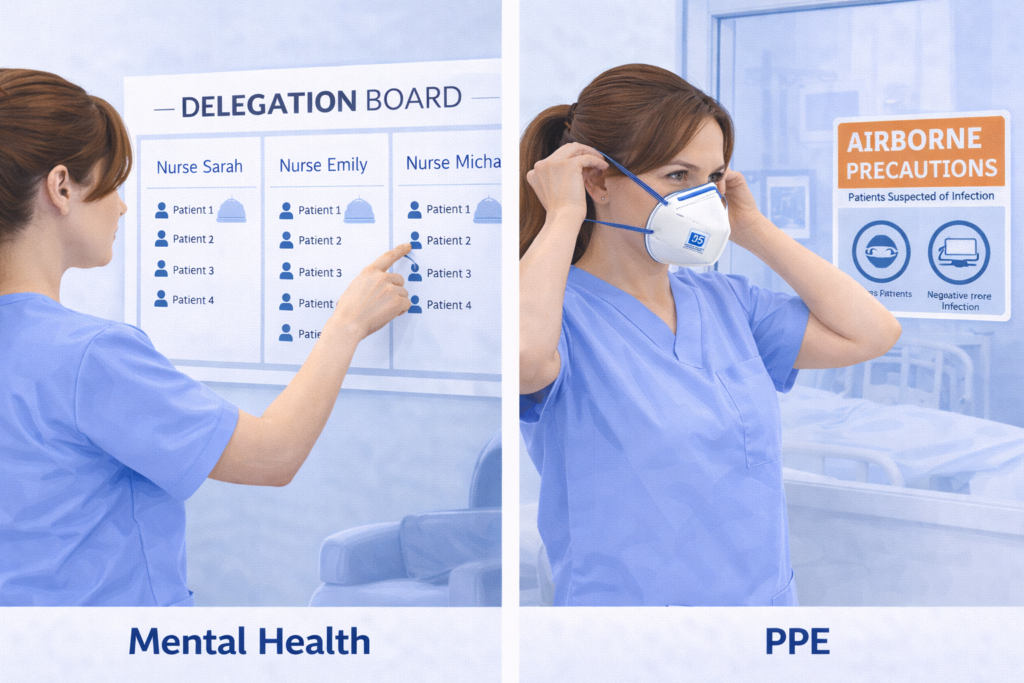
A nurse is caring for a client with active pulmonary tuberculosis. A student nurse who will be entering the room asks what personal protective equipment is required. Which response by the nurse is correct?
- A. A surgical mask is sufficient for entering the room.
- B. Gloves and a gown are required because TB is spread by contact.
- C. An N95 respirator mask is required, along with standard precautions.
- D. No special precautions are needed if the client is on antibiotics.
Correct Answer: C
Rationale: Active pulmonary tuberculosis requires airborne precautions because Mycobacterium tuberculosis is transmitted via airborne droplet nuclei — tiny particles that remain suspended in the air and can be inhaled. Airborne precautions require placement in a negative-pressure room and use of an N95 or higher-level respirator for all individuals entering the room. Standard precautions apply concurrently. Option A is incorrect — a surgical mask does not filter airborne particles adequately. Option B is incorrect — TB is not primarily a contact-transmission pathogen. Option D is incorrect — antibiotic therapy reduces but does not eliminate the risk of transmission until the client has demonstrated clinical response and three negative sputum smears.
Question 18 — Infection Control
A nurse finishes providing wound care for a client with a methicillin-resistant Staphylococcus aureus wound infection and removes their gloves. What is the next required action before leaving the room?
- A. Apply hand sanitizer at the bedside and exit the room.
- B. Perform hand hygiene with soap and water for at least 20 seconds.
- C. Remove the gown, then exit the room and perform hand hygiene.
- D. Apply a new pair of gloves before touching the door handle.
Correct Answer: B
Rationale: MRSA is an organism for which soap and water hand hygiene is preferred over alcohol-based hand rub in many institutional protocols, particularly after contact with infected wounds, because soap and water physically removes organisms from skin surfaces. Regardless of the specific organism, hand hygiene after glove removal before leaving a contact precautions room is a non-negotiable infection control standard. Option A may be acceptable in some protocols but is not the strongest answer when soap and water is available and wound contact has occurred. Option C incorrectly sequences PPE removal — gloves should be removed first, then gown, then hand hygiene. Option D does not replace hand hygiene.
Prioritization and Clinical Judgment NCLEX Practice Questions
Question 19 — Prioritization
A nurse on a medical-surgical unit receives report on four clients. Which client should the nurse assess first?
- A. A client with chronic kidney disease whose morning creatinine is 3.2 mg/dL, unchanged from yesterday.
- B. A client who is two hours post-cardiac catheterization and reports feeling a warm, wet sensation at the groin access site.
- C. A client with type 2 diabetes whose fasting blood glucose is 186 mg/dL.
- D. A client awaiting discharge who has not received discharge teaching yet.
Correct Answer: B
Rationale: A client reporting warmth and wetness at the groin access site following cardiac catheterization must be assessed immediately for arterial bleeding or hematoma formation at the femoral access site — a potentially life-threatening complication involving circulatory compromise. This represents an acute, unexpected change that requires immediate nursing assessment. Option A represents a chronic, stable finding — the unchanged creatinine indicates no acute deterioration. Option C represents a mildly elevated blood glucose that does not require immediate intervention. Option D is a discharge readiness concern with no acute clinical urgency.
Question 20 — Clinical Judgment / NGN-Style
A nurse is caring for a 68-year-old client who was admitted for pneumonia. At 0800, the client’s temperature is 38.9°C, respiratory rate is 24 breaths per minute, blood pressure is 118/74 mmHg, and oxygen saturation is 93% on 2L/min nasal cannula. At 1000, the nurse reassesses and finds: temperature 39.6°C, respiratory rate 30 breaths per minute, blood pressure 88/52 mmHg, oxygen saturation 88% on 2L/min. The client appears confused and diaphoretic. Which condition is the nurse most likely recognizing, and what is the priority action?
- A. Worsening pneumonia — increase the oxygen flow rate to 4L/min and reassess in 30 minutes.
- B. Septic shock — notify the physician immediately, prepare for IV fluid resuscitation, and increase supplemental oxygen.
- C. Hypovolemia — administer an oral fluid bolus and reassess blood pressure in one hour.
- D. Anxiety reaction — administer a prescribed anxiolytic and monitor vital signs every 15 minutes.
Correct Answer: B
Rationale: The client is demonstrating a rapid clinical deterioration consistent with septic shock: high fever, tachypnea, hypotension with systolic below 90, hypoxemia, new-onset confusion, and diaphoresis. This is a medical emergency. The nurse must recognize these cues as sepsis-related systemic deterioration — not isolated worsening of pneumonia — and act immediately. Notifying the physician activates the sepsis response protocol. IV fluid resuscitation addresses the hypotension. Increasing supplemental oxygen addresses the worsening hypoxemia. Option A dangerously underestimates the severity of the deterioration. Option C is insufficient — IV fluid resuscitation is required, not oral fluids, and the urgency demands physician notification. Option D is clinically inappropriate given the objective findings.

Conclusion
These 20 NCLEX practice questions cover the highest-yield content areas and reasoning patterns that appear most consistently on the licensing exam. Working through them with deliberate rationale review — understanding not just what the correct answer is but why each distractor is wrong — builds exactly the kind of transferable clinical judgment the NCLEX rewards. Every question you analyze deeply during preparation is a reasoning pattern you carry into the testing room.
Use these NCLEX practice questions as a focused review tool, as a self-assessment of your current reasoning strengths and weaknesses, and as a model for how to engage with every question in your preparation. The rationale analysis skills you build here apply to every question bank, every practice exam, and every item on the actual NCLEX. Consistent, reflective practice is what the highest-performing candidates have in common — and it is available to every nursing student willing to use it.
How many NCLEX practice questions should I do per day?
Most candidates benefit from 50 to 100 NCLEX practice questions per day, combined with thorough rationale review after each session. Quality of review matters more than volume — spending equal time analyzing rationales as answering questions produces far stronger clinical reasoning development than simply maximizing question count.
Are NCLEX practice questions similar to the real exam?
High-quality NCLEX practice questions from reputable prep resources closely mirror the clinical reasoning demands of the real exam. The best practice questions test application and clinical judgment rather than factual recall, include plausible distractors, and provide detailed rationales that explain the reasoning behind each answer choice. Free sample Next Generation NCLEX questions are available directly on the NCSBN website and represent the most authentic practice resource available.
What content areas have the most NCLEX practice questions?
The highest-yield content areas for NCLEX practice questions mirror the test plan category weights: physiological integrity — particularly cardiovascular, respiratory, neurological, and pharmacology — accounts for the largest proportion of the exam. Safe and effective care environment, including delegation and prioritization, is the second most heavily tested category. Integrating practice questions across all content areas while proportionally weighting your time toward these high-yield topics produces the most efficient preparation.
How do I improve my score on NCLEX practice questions?
The most effective way to improve NCLEX practice question performance is to shift from passive review to active rationale analysis. After every question — right or wrong — read the full explanation, identify the clinical reasoning principle being tested, and note any content gaps or reasoning errors in a tracking log. Review that log weekly and redirect study time toward your most persistent weak areas. This discipline transforms practice questions from a performance measure into a genuine learning tool.
What is the difference between traditional and NGN NCLEX practice questions?
Traditional NCLEX practice questions are primarily multiple-choice items testing application of a single clinical concept. NGN practice questions include unfolding case studies that follow an evolving patient across six questions, bow tie items that test three-step clinical judgment, extended multiple response questions, and matrix items. Both types test clinical reasoning, but NGN formats require you to integrate and apply information across a longer clinical narrative and across multiple cognitive skill levels simultaneously.
Leave a Reply