NCLEX pharmacology is one of the most heavily tested and most anxiety-provoking content areas on the licensing exam — and one of the areas where a clear, strategic approach makes the biggest difference between struggling and succeeding. With thousands of medications in clinical use, many nursing students make the mistake of trying to memorize individual drugs, only to find that the sheer volume of information is unmanageable and that the NCLEX rarely tests the isolated facts they spent the most time memorizing.
The NCLEX tests pharmacology differently than most nursing school pharmacology exams. Rather than asking you to identify a specific drug’s mechanism of action from a list, NCLEX pharmacology questions ask you to apply medication knowledge to clinical scenarios: which finding would cause you to hold this medication, what is the priority nursing assessment before administration, what patient teaching is most important, and which adverse effect requires immediate reporting. These are clinical judgment questions that require you to understand how medications work and what to do with that understanding — not just what the drug is called.
This guide provides the must-know NCLEX pharmacology tips for 2026 — the study approach, the highest-yield drug classes, the priority nursing assessment principles, and the patient safety concepts that appear most consistently across the exam. Whether you are just beginning your pharmacology review or looking to strengthen a persistent weak area, these strategies will help you approach NCLEX pharmacology with confidence and clinical clarity.
Why NCLEX Pharmacology Requires a Different Study Approach
The fundamental mistake most students make with NCLEX pharmacology is studying individual drugs rather than drug classes. The NCLEX does not primarily test whether you can recall the mechanism of action of a specific named medication. It tests whether you can apply the clinical principles of a medication class to a patient scenario — including the priority assessments before administration, the most dangerous adverse effects, the key patient teaching points, and the situations in which a medication should be held or reported.
When you study NCLEX pharmacology by drug class rather than individual drug, something powerful happens: your knowledge becomes transferable. Understanding the class-level principles of anticoagulants — that they increase bleeding risk, require monitoring of coagulation labs, require assessment for signs of bleeding before and after administration, and require specific reversal agents — allows you to answer questions about heparin, warfarin, enoxaparin, rivaroxaban, and apixaban with the same foundational reasoning. Memorizing individual drugs in isolation produces knowledge that is narrow, fragile, and difficult to apply under exam pressure.
NCLEX pharmacology studied at the class level is also more durable. Class-level principles encode more deeply because they are connected to pathophysiology, clinical reasoning, and patient safety principles rather than isolated facts. They hold up under the adaptive pressure of the exam in a way that memorized drug lists rarely do.
The Four Questions to Ask About Every Drug Class
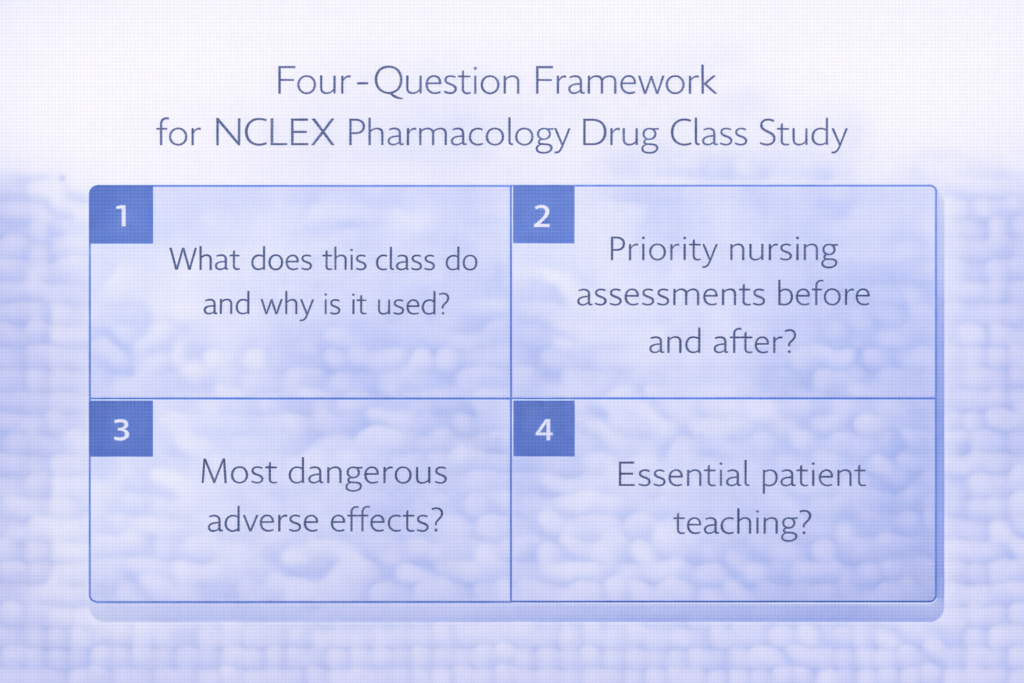
For every drug class you study in your NCLEX pharmacology preparation, answer four questions consistently: What does this class do and why is it used? What are the most important nursing assessments before and after administration? What are the most dangerous or most commonly tested adverse effects? What must the patient know about this medication for safe self-management at home? These four questions organize pharmacology knowledge into the exact format the NCLEX tests it — clinical application rather than isolated fact recall.
The Highest-Yield NCLEX Pharmacology Drug Classes
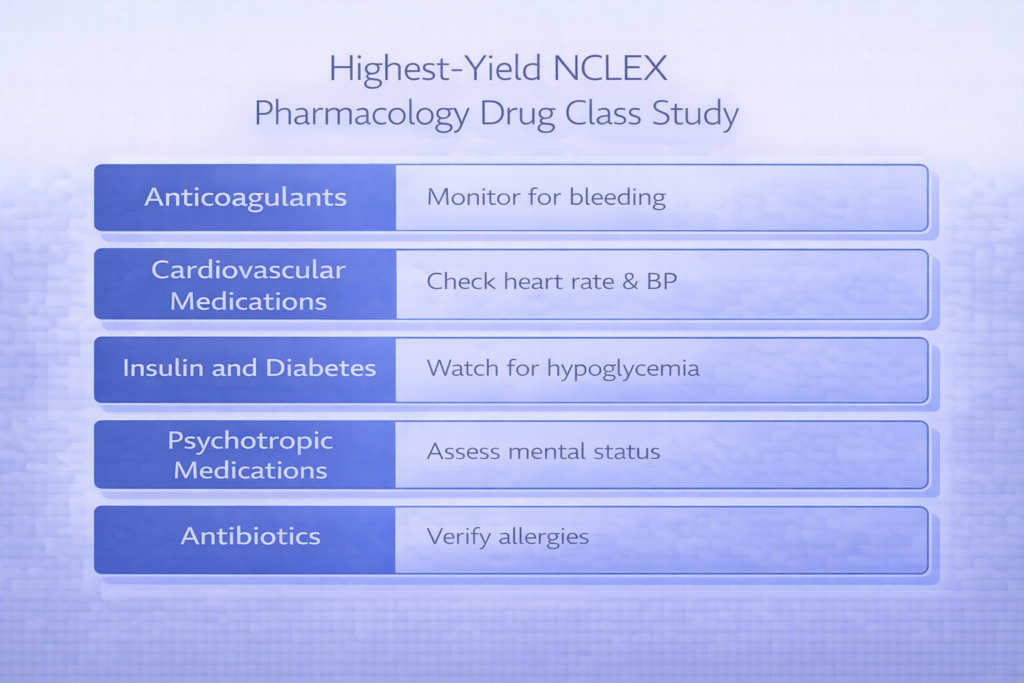
While all medication classes appear somewhere on the NCLEX, certain drug classes are tested far more consistently and with far more clinical depth than others. Prioritizing these classes in your NCLEX pharmacology preparation produces the highest return on study time.
Anticoagulants
Anticoagulants are among the most heavily tested classes in NCLEX pharmacology. Key drugs include heparin, warfarin, enoxaparin (low-molecular-weight heparin), and the direct oral anticoagulants — rivaroxaban, apixaban, and dabigatran. For all anticoagulants, know the priority assessment for bleeding — assess for unusual bruising, blood in urine or stool, prolonged bleeding from minor cuts, and neurological changes suggesting intracranial bleeding. For heparin, know that aPTT monitors therapeutic levels and that protamine sulfate is the reversal agent. For warfarin, know that INR monitors therapeutic range (2.0 to 3.0 for most indications), that vitamin K is the reversal agent, and that consistent dietary vitamin K intake is essential patient teaching. Anticoagulant questions on NCLEX pharmacology frequently test what assessment finding would cause the nurse to hold the medication and which reversal agent is appropriate for each drug.
Cardiovascular Medications
Cardiovascular NCLEX pharmacology encompasses antihypertensives, diuretics, cardiac glycosides, and antidysrhythmics. For antihypertensives — ACE inhibitors, ARBs, beta blockers, and calcium channel blockers — know the class-specific adverse effects: ACE inhibitors cause a persistent dry cough and angioedema, beta blockers cause bradycardia and mask hypoglycemia symptoms in diabetic patients, and calcium channel blockers cause peripheral edema and reflex tachycardia. For digoxin, know the therapeutic range (0.5 to 2.0 ng/mL), the signs of toxicity (bradycardia, nausea, visual disturbances including yellow-green halos), and that hypokalemia potentiates toxicity. For diuretics, know that loop diuretics cause hypokalemia and that potassium-sparing diuretics — spironolactone — cause hyperkalemia. These specific safety profiles are the heart of cardiovascular NCLEX pharmacology.
Insulin and Diabetes Medications
Insulin is one of the highest-priority NCLEX pharmacology topics because insulin errors are a leading cause of medication-related patient harm. Know the onset, peak, and duration of the major insulin types: rapid-acting (lispro, aspart) peaks in 1 to 3 hours, short-acting regular insulin peaks in 2 to 4 hours, NPH peaks in 4 to 12 hours, and long-acting (glargine, detemir) has no pronounced peak. For NCLEX pharmacology purposes, the most critical teaching point is that regular insulin is the only type that can be given intravenously. When mixing insulins, draw clear (regular or rapid-acting) before cloudy (NPH) — remembered as ‘clear before cloudy.’ The priority assessment before insulin administration is always blood glucose, and the nurse must know the threshold at which to hold the dose and notify the provider.
Psychotropic Medications
Psychotropic NCLEX pharmacology includes antipsychotics, antidepressants, mood stabilizers, and anxiolytics. For antipsychotics — both typical and atypical — know that extrapyramidal side effects (EPS) including tardive dyskinesia, akathisia, and acute dystonia are major adverse effects. Neuroleptic malignant syndrome is a life-threatening emergency presenting with high fever, severe muscle rigidity, and altered consciousness. For lithium, know the narrow therapeutic range (0.6 to 1.2 mEq/L for maintenance), the early signs of toxicity (nausea, tremor, polyuria), and that consistent sodium and fluid intake is essential because low sodium causes lithium retention. For SSRIs, know the risk of serotonin syndrome when combined with other serotonergic agents. For MAOIs, know the critical dietary restriction of tyramine-containing foods and the dangerous interaction with sympathomimetic drugs.
Antibiotics
Antibiotic NCLEX pharmacology focuses on the most commonly tested adverse effect profiles rather than mechanism of action. Aminoglycosides — gentamicin, tobramycin — are nephrotoxic and ototoxic; monitor renal function and assess for hearing changes. Vancomycin causes Red Man Syndrome with too-rapid infusion and is nephrotoxic; monitor trough levels. Fluoroquinolones — ciprofloxacin — are associated with tendon rupture and QT prolongation. Penicillin-class antibiotics carry the highest risk of anaphylaxis; always assess for allergy before administration. For all antibiotics, the most universally applicable NCLEX pharmacology teaching point is to complete the full course of medication even when symptoms resolve.
Additional High-Yield NCLEX Pharmacology Classes
Opioid Analgesics and Reversal
Opioid analgesics are a consistently tested area of NCLEX pharmacology because of their significant risk profile and the nurse’s central role in safe administration and monitoring. Before administering any opioid, assess the respiratory rate — hold if below 12 breaths per minute — and assess pain using a validated scale. After administration, monitor for respiratory depression, sedation, hypotension, and constipation. Know that naloxone (Narcan) is the opioid reversal agent and that it has a shorter duration of action than most opioids, requiring repeated doses and ongoing monitoring after administration. Patient teaching for opioids at home must include not driving or operating machinery, not combining with alcohol or CNS depressants, and keeping naloxone accessible.
Corticosteroids
Corticosteroids are used across multiple clinical contexts — respiratory, autoimmune, inflammatory, and oncologic — making them a high-yield NCLEX pharmacology class that appears in many content areas. The most important adverse effects for NCLEX purposes are immunosuppression — increased infection risk requiring assessment for subtle infection signs — hyperglycemia, fluid retention, hypokalemia, and osteoporosis with long-term use. Patients must never abruptly stop corticosteroids after prolonged use — adrenal insufficiency and adrenal crisis can result from abrupt discontinuation. This tapering requirement is one of the most commonly tested corticosteroid teaching points on NCLEX pharmacology questions.
Anticonvulsants
Anticonvulsant NCLEX pharmacology focuses on phenytoin (Dilantin) and valproic acid as the most heavily tested agents. For phenytoin, know the therapeutic range (10 to 20 mcg/mL), that gingival hyperplasia is a characteristic adverse effect requiring oral hygiene teaching, and that IV administration requires a dedicated line with normal saline — phenytoin precipitates in dextrose solutions. For all anticonvulsants, the priority NCLEX pharmacology teaching points are to never stop the medication abruptly — doing so can precipitate status epilepticus — and to report any changes in seizure frequency or character to the provider.
Thyroid Medications
Thyroid NCLEX pharmacology centers on levothyroxine for hypothyroidism and propylthiouracil or methimazole for hyperthyroidism. For levothyroxine, teach patients to take the medication on an empty stomach in the morning, to take it consistently at the same time each day, and that therapeutic effects take several weeks to fully manifest. Signs of over-replacement — hyperthyroid symptoms including tachycardia, weight loss, heat intolerance, and nervousness — should be reported. For antithyroid medications, the priority adverse effect is agranulocytosis — a dangerous reduction in white blood cells that presents as fever and sore throat and requires immediate reporting and a CBC.
Priority Nursing Assessment Principles for NCLEX Pharmacology
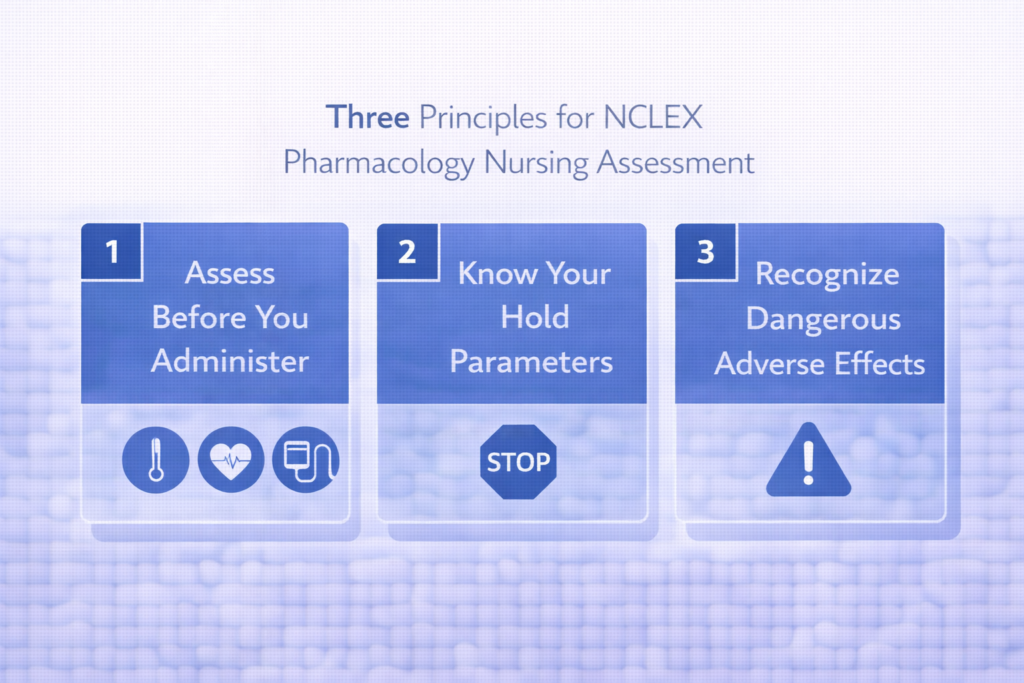
Beyond individual drug classes, NCLEX pharmacology consistently tests a set of universal nursing assessment principles that apply across medication categories. Mastering these principles gives you a reliable clinical reasoning framework for pharmacology questions even when the specific drug is unfamiliar.
Always Assess Before You Administer
The most fundamental NCLEX pharmacology principle is assess before administer. Before giving any medication, the nurse must confirm that the clinical indicators support administration. For antihypertensives, check blood pressure. For digoxin, check heart rate and hold if below 60. For opioids, check respiratory rate and pain level. For insulin, check blood glucose. For anticoagulants, assess for active bleeding or signs of abnormal bleeding. This assess-first principle is embedded in the majority of NCLEX pharmacology questions that ask what the nurse should do before administering a medication — and assessment is almost always the correct first answer.
Know Your Hold Parameters
NCLEX pharmacology questions frequently present a patient with a clinical finding and ask whether the nurse should administer the scheduled medication. Knowing the hold parameters for the highest-yield drug classes prevents these questions from requiring content recall under pressure. Hold digoxin for heart rate below 60. Hold antihypertensives for systolic blood pressure below 90 or per facility parameters. Hold metformin before contrast procedures due to lactic acidosis risk. Hold insulin for blood glucose below the threshold specified in the order. Notify the provider and document the held dose and the clinical reason in all cases.
Recognize the Most Dangerous Adverse Effects
NCLEX pharmacology prioritizes the adverse effects with the highest potential for patient harm. For each drug class, know the one or two adverse effects that would constitute a clinical emergency requiring immediate nursing action. Anticoagulants — serious bleeding. Opioids — respiratory depression. ACE inhibitors — angioedema. Antipsychotics — neuroleptic malignant syndrome. Lithium — toxicity. Corticosteroids — adrenal crisis with abrupt discontinuation. These are the adverse effects that appear in NCLEX pharmacology prioritization and safety questions, and recognizing them rapidly and accurately is a clinical competency the exam consistently tests.
Patient Teaching Priorities in NCLEX Pharmacology
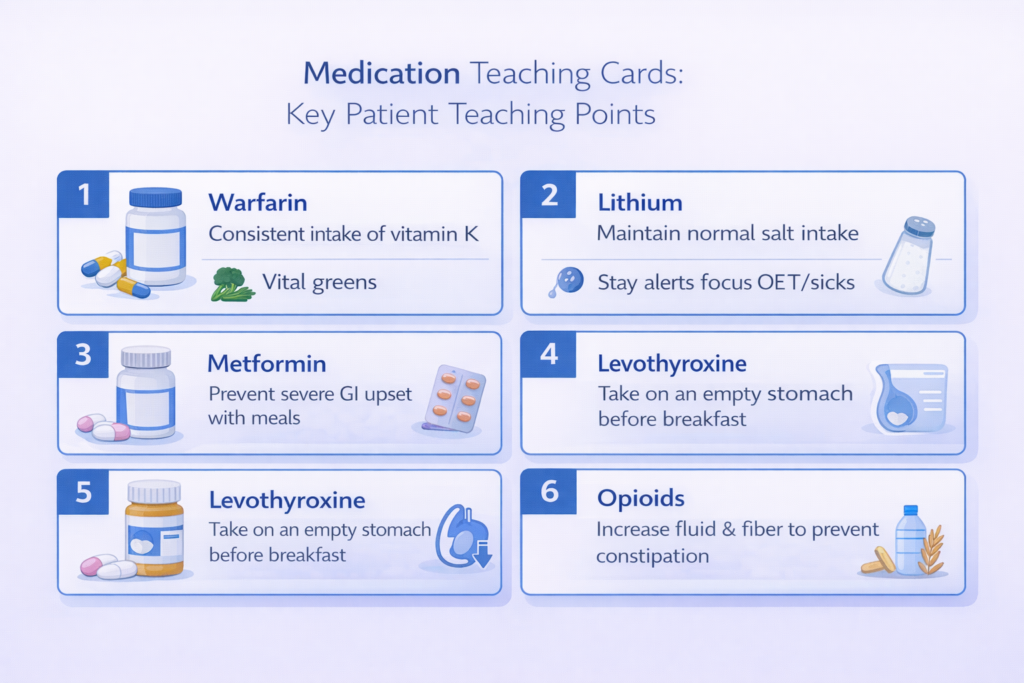
Patient teaching is a consistently tested dimension of NCLEX pharmacology because safe medication management at home is a central nursing responsibility. The exam tests not just what to teach but what is most important to teach — and on prioritization questions, that distinction matters significantly.
- Warfarin: Maintain consistent dietary vitamin K intake — do not eliminate vitamin K-containing foods, but eat them in consistent amounts. Report unusual bleeding or bruising. Keep all INR monitoring appointments. Avoid NSAIDs and aspirin unless directed by the provider. Carry a medical alert identification.
- Lithium: Maintain consistent sodium intake and drink 2 to 3 liters of fluid daily. Avoid diuretics and NSAIDs unless prescribed. Report early toxicity signs — nausea, tremor, increased urination — immediately. Do not skip doses or adjust the dose without provider guidance.
- Metformin: Take with food to reduce GI side effects. Hold before contrast procedures and do not restart until renal function is confirmed normal. Report signs of lactic acidosis — muscle pain, weakness, difficulty breathing, stomach discomfort.
- Levothyroxine: Take on an empty stomach 30 to 60 minutes before breakfast. Take at the same time every day. Do not take with calcium, iron, or antacids — these impair absorption. Report signs of over-replacement: rapid heart rate, weight loss, heat intolerance, tremor.
- Corticosteroids (long-term): Never stop the medication abruptly — taper as directed. Take with food to reduce GI irritation. Report signs of infection promptly — fever, unusual fatigue, delayed wound healing. Monitor blood glucose, especially in diabetic patients. Report mood changes or insomnia.
- Opioids: Do not drive or operate machinery. Do not consume alcohol or other CNS depressants. Use a stool softener proactively — constipation is an expected effect. Store medications securely and keep naloxone available. Contact the provider before stopping the medication.
How to Study NCLEX Pharmacology Efficiently
Knowing what to study is only half the equation. The other half is studying it in a way that builds durable, applicable clinical knowledge rather than shallow memorization that fades under exam pressure.
- Integrate pharmacology into every content area from day one: Do not treat NCLEX pharmacology as a standalone topic to be reviewed at the end of your preparation. When you study cardiovascular nursing, study cardiac medications at the same time. When you study endocrine disorders, study diabetes medications alongside the pathophysiology. Contextual pharmacology learning — medication knowledge anchored to the clinical condition it treats — encodes more deeply and transfers more reliably than isolated drug review.
- Use mnemonics selectively for high-yield adverse effects: Mnemonics are valuable for NCLEX pharmacology when they capture a safety-critical fact that is difficult to retrieve under pressure. The ‘clear before cloudy’ rule for insulin mixing, the ABC of beta blocker adverse effects (bradycardia, bronchospasm, blood glucose masking), and the ‘HALT’ mnemonic for hold parameters are examples of targeted mnemonics that serve a clear purpose. Avoid building an entire pharmacology review around mnemonics — they work best as retrieval cues for well-understood concepts, not as substitutes for clinical understanding.
- Practice pharmacology with NCLEX-style questions daily: Content review alone is insufficient for NCLEX pharmacology mastery. Daily practice with pharmacology-specific NCLEX questions builds the clinical application skills the exam tests. Filter your question bank by pharmacology content, work through 20 to 30 targeted questions per day, and review every rationale with the four-question framework: what does the class do, what are the priority assessments, what are the dangerous adverse effects, and what is the essential patient teaching.
- Review the top 20 high-alert medications weekly: ISMP publishes a list of high-alert medications — drugs that carry an elevated risk of patient harm when used in error. These medications appear disproportionately in NCLEX pharmacology questions because they represent the highest clinical stakes. The list includes anticoagulants, insulin, opioids, concentrated electrolytes, chemotherapy agents, and neuromuscular blocking agents. Reviewing the nursing safety principles for each of these weekly keeps their priority assessment and hold parameters in active memory throughout your preparation.

Conclusion
NCLEX pharmacology becomes manageable — and eventually one of your strongest content areas — when you shift from memorizing individual drugs to mastering drug classes through clinical application. Apply the four-question framework to every class you study. Prioritize the highest-yield classes: anticoagulants, cardiovascular medications, insulin, psychotropics, antibiotics, opioids, corticosteroids, anticonvulsants, and thyroid medications. Master the universal nursing assessment principles — assess before administer, know your hold parameters, recognize dangerous adverse effects. Build patient teaching fluency for the medications most likely to appear in teaching scenarios.
Integrate NCLEX pharmacology into every content area from the first day of your preparation, practice with targeted pharmacology questions daily, and review high-alert medications weekly. The exam does not ask you to remember everything about every drug — it asks you to demonstrate that you can keep patients safe when medications are involved. With a class-based, clinically anchored approach, that is exactly what your NCLEX pharmacology preparation will produce.
What pharmacology do I need to know for the NCLEX?
The highest-yield NCLEX pharmacology classes are anticoagulants, cardiovascular medications including antihypertensives, diuretics, and digoxin, insulin and diabetes medications, antipsychotics and mood stabilizers including lithium, antibiotics, opioid analgesics, corticosteroids, anticonvulsants, and thyroid medications. For each class, focus on the priority nursing assessments before administration, the most dangerous adverse effects, and the essential patient teaching points rather than memorizing individual drug names.
How do you study pharmacology for the NCLEX?
Study NCLEX pharmacology by drug class rather than individual drug, and integrate it into every content area throughout your preparation rather than saving it for the end. Use the four-question framework for each class: what does it do, what are the priority nursing assessments, what are the dangerous adverse effects, and what is the essential patient teaching? Practice with NCLEX-style pharmacology questions daily and review rationales in full. Review high-alert medications weekly to keep critical safety parameters in active memory.
What are the most important drug classes for NCLEX pharmacology?
The most important drug classes for NCLEX pharmacology are anticoagulants, insulin, opioids, antipsychotics and lithium, cardiovascular medications including digoxin and antihypertensives, corticosteroids, and antibiotics — particularly aminoglycosides and vancomycin. These classes appear across the most content areas, carry the highest patient safety stakes, and generate the most clinical judgment questions on the exam.
Does the NCLEX ask about specific drug names or drug classes?
Both. NCLEX pharmacology questions reference specific drug names within clinical scenarios, so familiarity with the most commonly tested individual medications is necessary. However, the reasoning required to answer correctly is almost always class-level: knowing the priority assessments, adverse effects, and teaching points for the class allows you to apply that knowledge to specific drug questions even when the individual drug name is less familiar. Class-level mastery is the foundation; individual drug familiarity is the application layer built on top of it.
How do I remember hold parameters for NCLEX pharmacology?
Prioritize learning hold parameters for the highest-risk drug classes: hold digoxin for heart rate below 60, hold antihypertensives for systolic blood pressure below 90 or per facility parameters, hold opioids for respiratory rate below 12, hold insulin for blood glucose below the order threshold, and hold anticoagulants when active or abnormal bleeding is present. Practice with NCLEX pharmacology questions that test these parameters specifically — repeated clinical application of the hold criteria in question format encodes them far more durably than memorization alone.
Leave a Reply